There is no shortage of YouTube channels for Spanish learners. The harder part is deciding which ones are actually worth opening when you have limited time.
A channel can be useful because it gives you comprehensible input, explains grammar clearly, exposes you to a particular variety of Spanish, or gives you conversations to follow. Some are almost entirely lessons; others are closer to ordinary videos, podcasts or stories.
Once you have the basics, the right channel is often less about another grammar lesson and more about finding Spanish you can consistently understand and actually want to watch. You may be able to read Spanish reasonably well but still struggle when a native speaker talks at full speed.
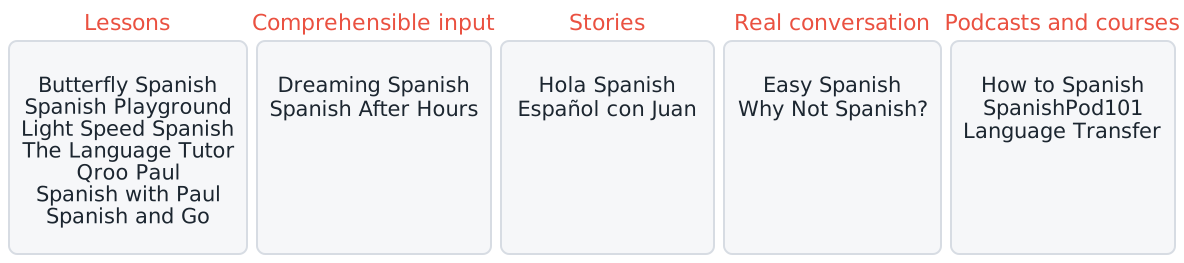
Below are 16 channels worth knowing, based on what they are currently publishing and the kinds of Spanish-learning material their recent videos provide.
1. Hola Spanish
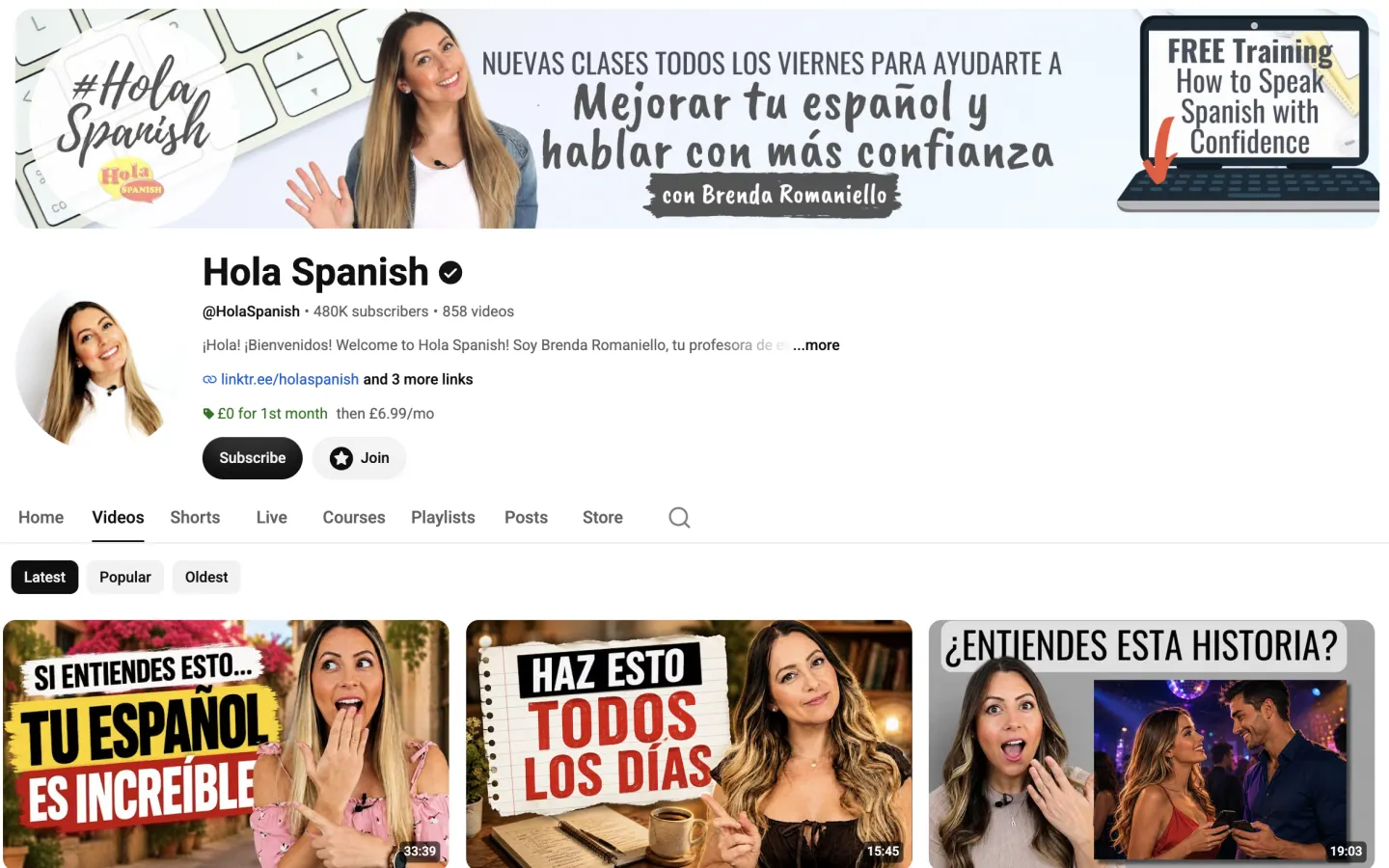
Hola Spanish is presented by Brenda Romaniello, with explanations in English. Its recent videos lean towards comprehension challenges rather than a conventional sequence of short grammar lessons. Titles include challenges around understanding a Spanish story, different Spanish accents, and extended real Spanish conversation.
It should appeal particularly to an intermediate learner who already knows enough Spanish to attempt longer stretches of listening, but who still needs help bridging the gap between learner material and faster, more varied speech.
2. Spanish After Hours
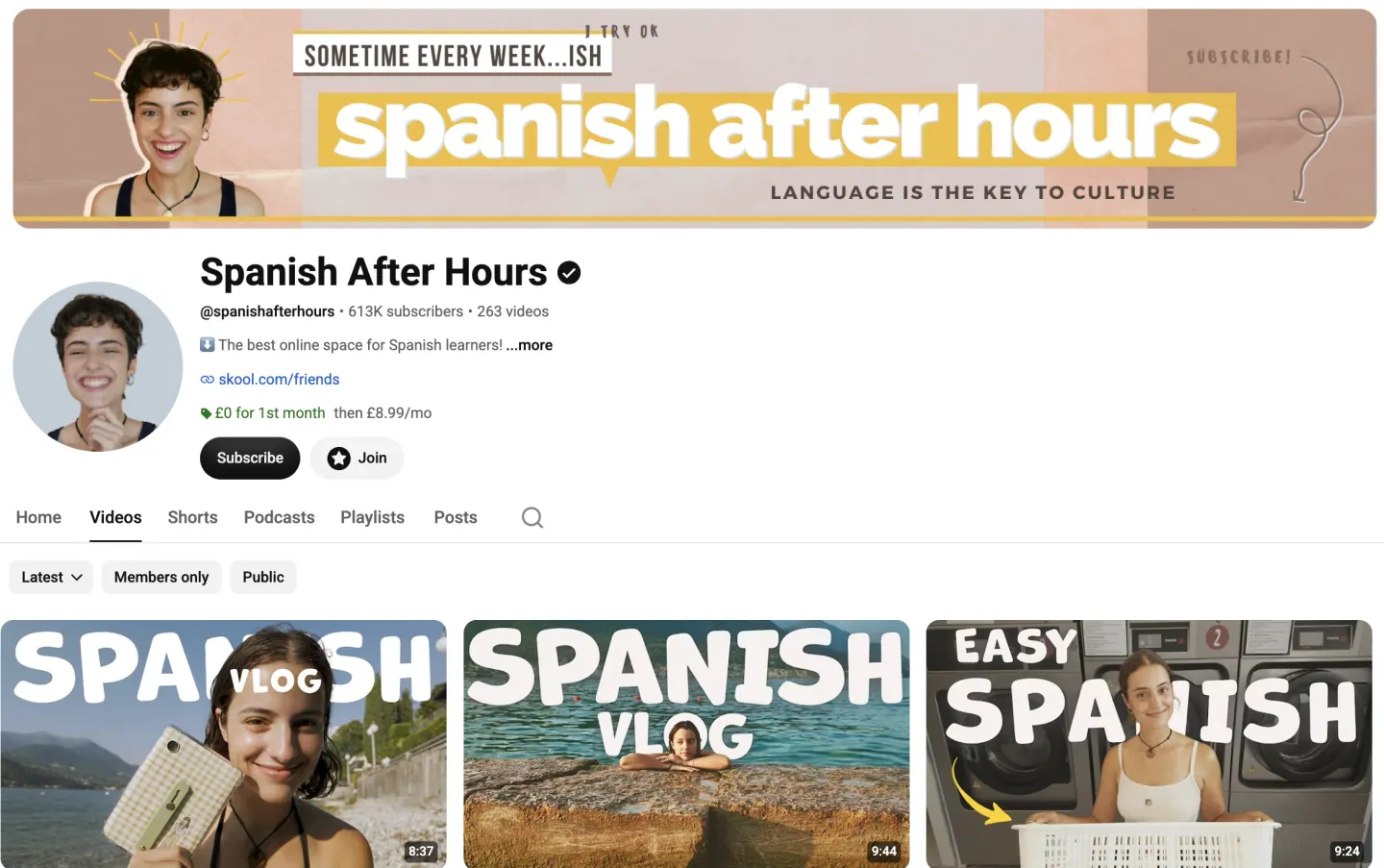
Spanish After Hours takes the form of slow, everyday vlogs labelled as comprehensible input. Recent videos cover ordinary situations such as a laundromat, breakfast, the weather and even playing a cosy game. The videos use Mexican Spanish.
This is a natural fit for learners who want comprehensible input but prefer everyday scenes over grammar-heavy instruction. It can also work well when you want a shorter listening session without moving all the way back to beginner lesson material.
Most of the recent videos measured also carry both Spanish and English subtitles.
3. Spanish Playground
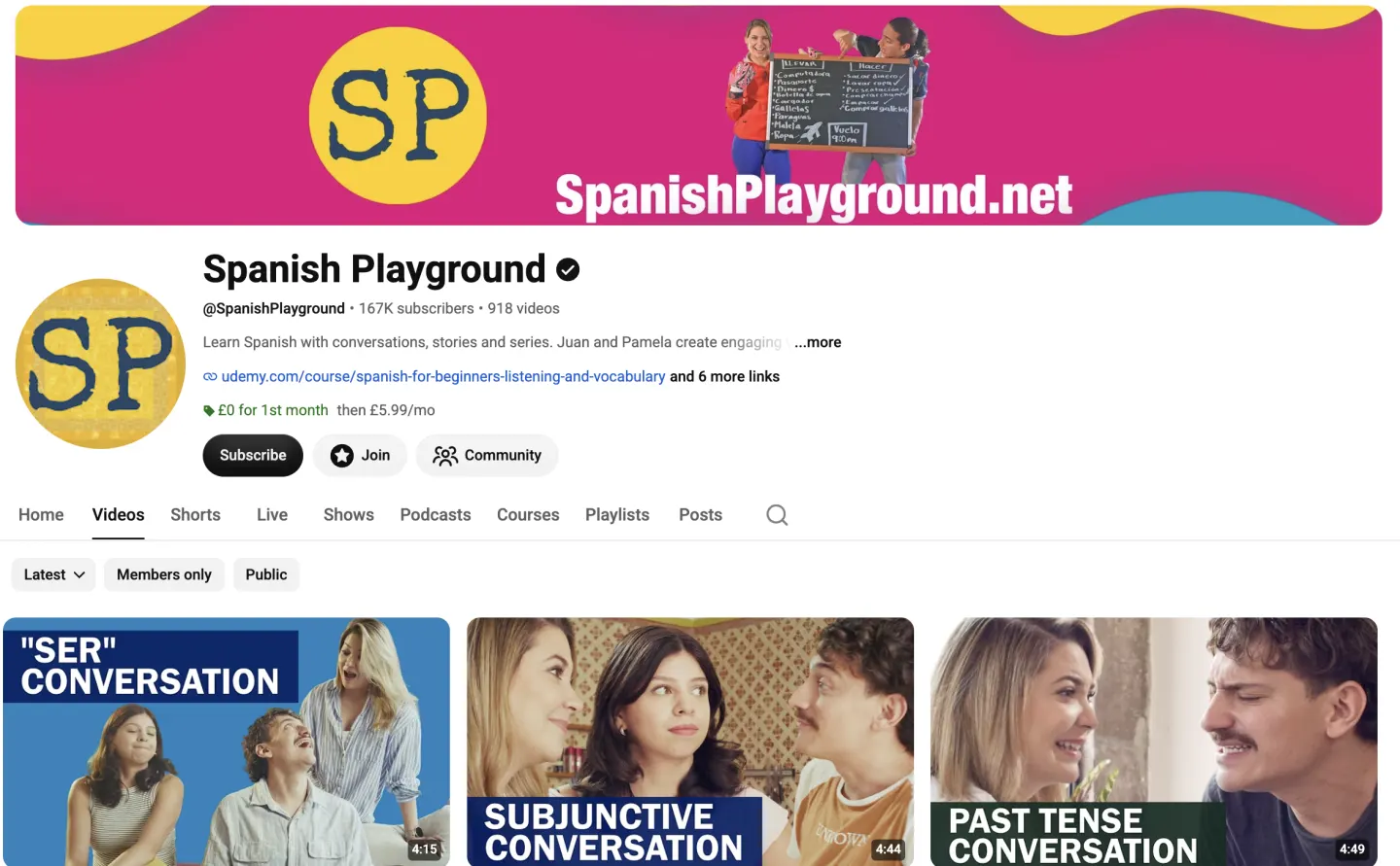
Spanish Playground is built around short, scripted conversations, with each video focusing on a particular grammar point. Recent topics include ser, the subjunctive, preterite versus imperfect, and verbs such as gustar.
It suits learners who still want explicit explanations alongside listening, especially when there is a grammar area they are actively trying to understand. It is less about putting on a 30-minute conversation and more about taking one language problem at a time.
4. Español con Juan
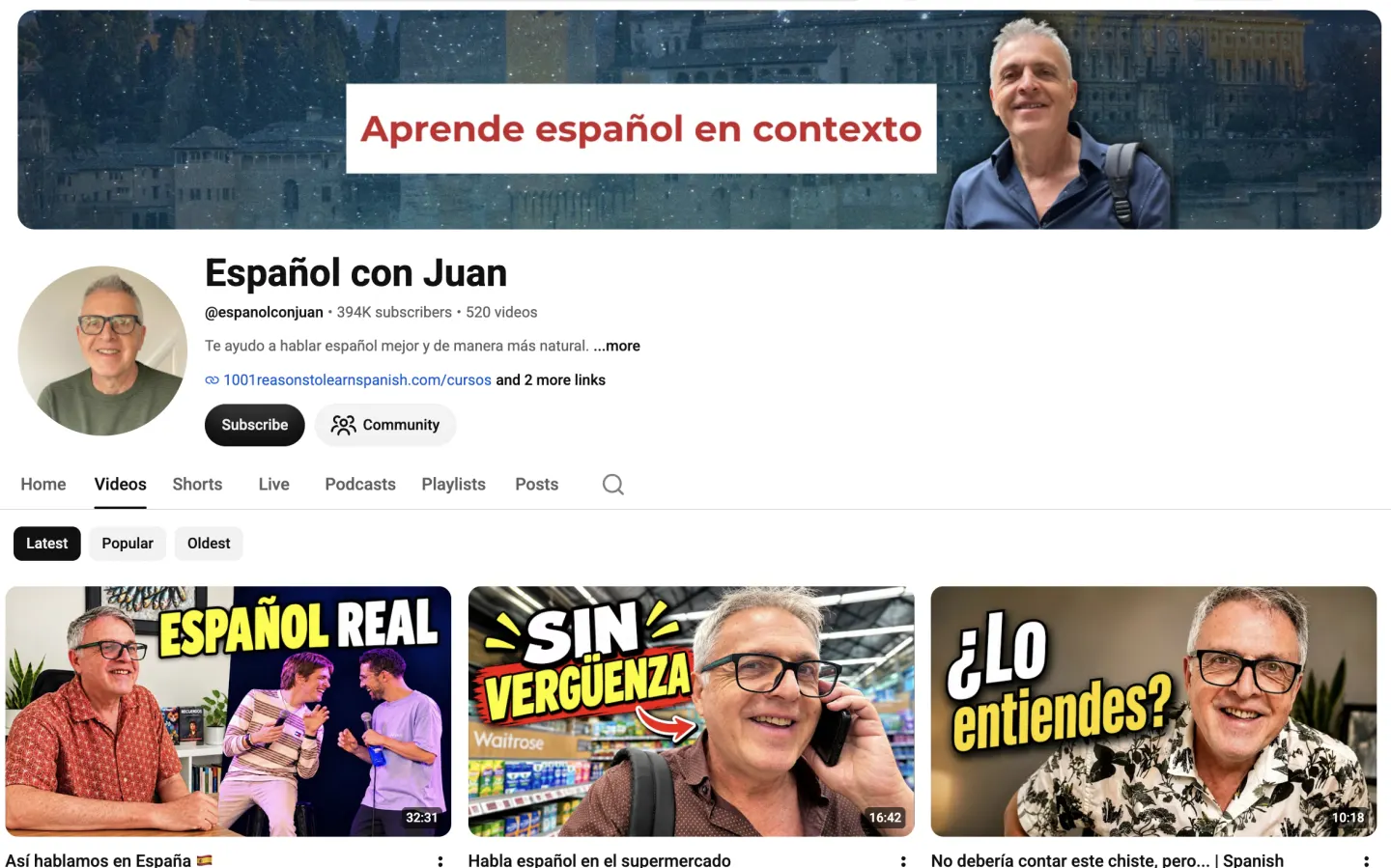
Español con Juan is very different in feel from a conventional English-led Spanish lesson. Juan, who is from Granada, presents monologues and stories with Spanish titles such as “Así hablamos en España” and “Habla español en el supermercado”.
This makes it particularly suitable for learners who are moving towards Spanish-only material. The emphasis is on following Juan as he talks about situations, stories and ways of speaking, so you can spend a sustained period listening without relying on English instruction.
5. Spanish and Go
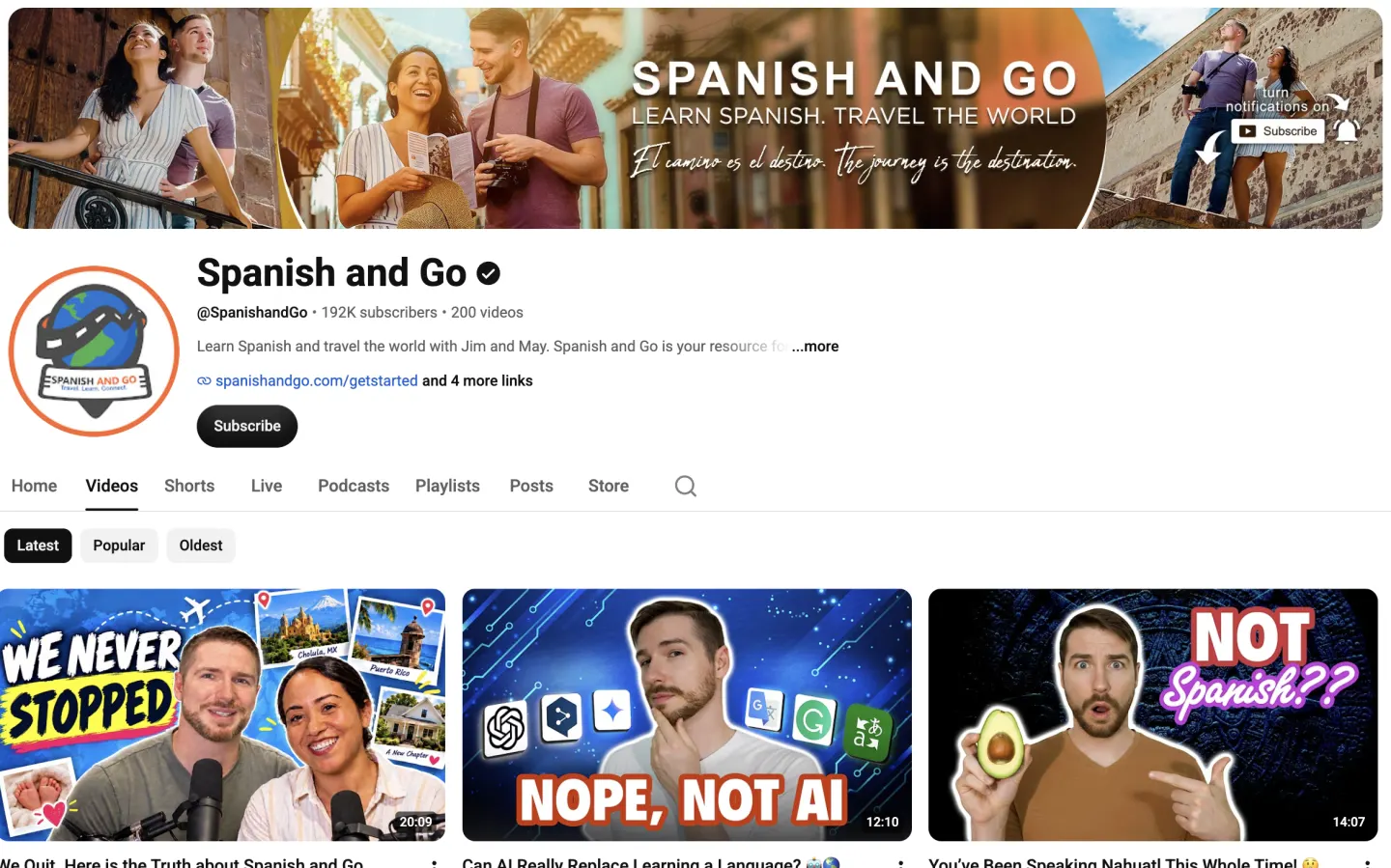
Spanish and Go is presented in English by Jim and May and focuses on Mexican culture and usage. Recent topics include phrases you might hear at a taco stand, diminutives and Nahuatl loanwords.
The channel suits learners who want to understand not just what a Spanish expression means, but how language connects with Mexican culture and everyday usage. Because the explanations are in English, it is also accessible when the underlying subject matter is still above your comfortable listening level.
6. Butterfly Spanish
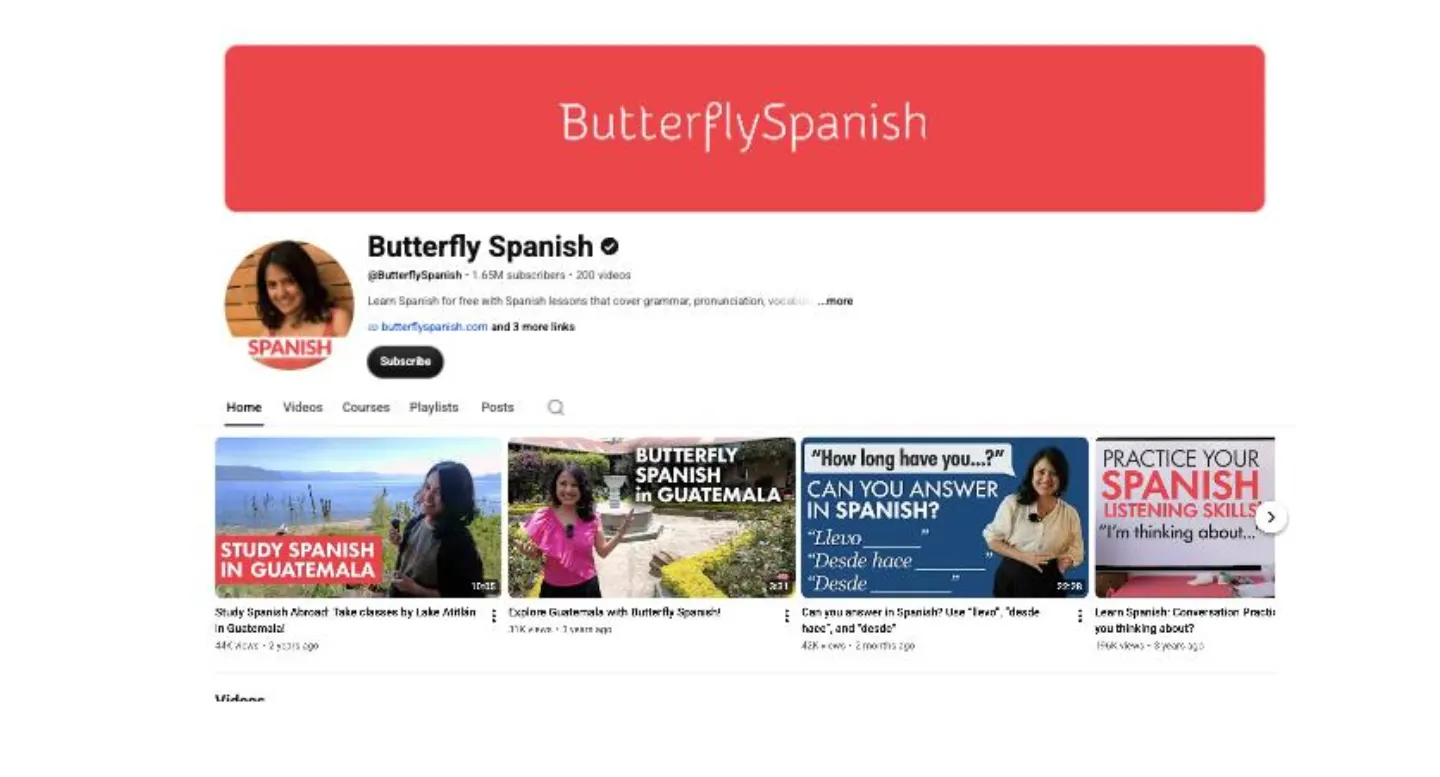
Butterfly Spanish is taught by Ana from Mexico and is presented in English. The format is straightforward: one grammar or vocabulary topic per lesson. Recent videos cover the verb pasar, exaggeration, describing food and frequency adverbs.
It is especially suitable for learners who still have gaps in grammar or vocabulary and want a clearly defined lesson rather than open-ended listening. At the same time, the examples give you Spanish to hear alongside the explanation.
Butterfly Spanish is also the most frequently recommended channel in the community sample used for this article, with ten distinct people recommending it across five threads. Only one of its twenty most recent videos in the measured sample carried a human-written Spanish subtitle track.
7. Dreaming Spanish
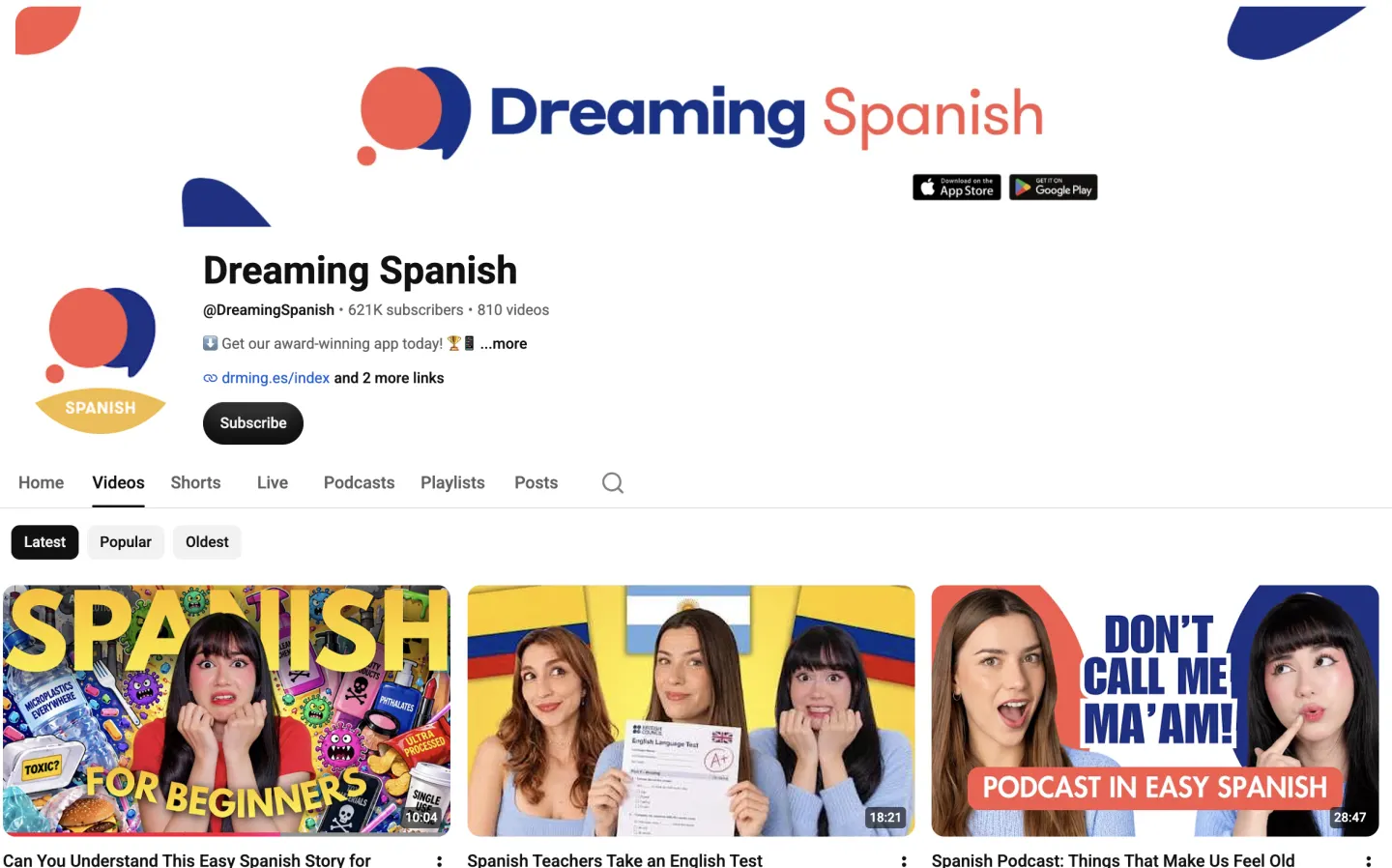
Dreaming Spanish centres on graded comprehensible input, alongside a Spanish-language podcast. Its recent material ranges from beginner stories to longer conversations, with the channel based in Spain.
This is one of the clearest choices for a learner whose priority is sustained comprehensible input. The format is designed to make meaning understandable through things such as gesture, drawing and context instead of depending on subtitles.
That last point is important when interpreting subtitle data: none of the twenty measured videos had a human-written Spanish subtitle track, but that is part of the method rather than evidence that the channel has overlooked a useful study feature.
8. Language Transfer
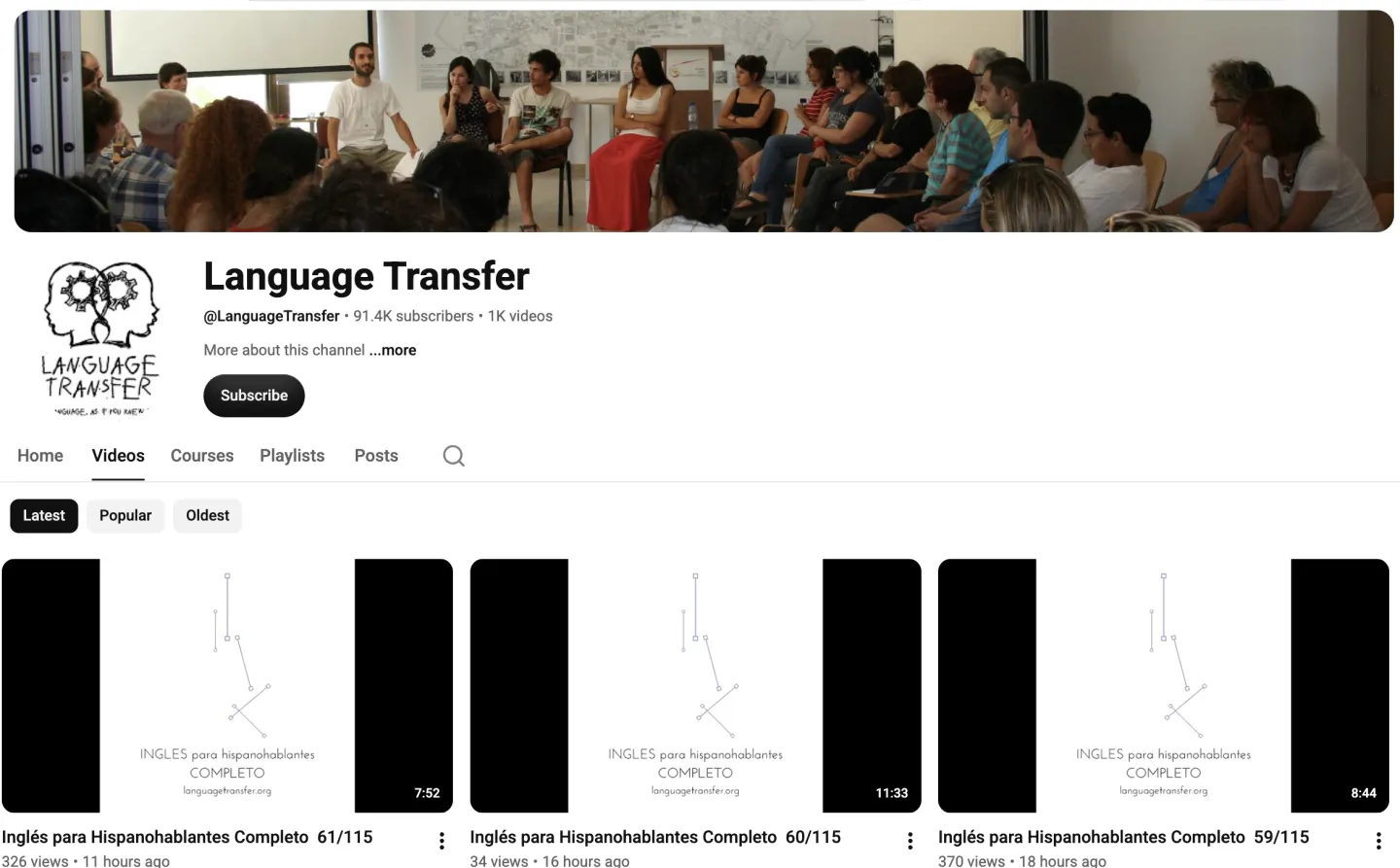
Language Transfer needs particular attention because the name of the channel can give a misleading impression of what a learner will find in its recent uploads.
All twelve of the channel’s most recent uploads are “Inglés para Hispanohablantes”, its course teaching English to Spanish speakers. The videos are numbered 54 to 61 of 115. That explains why all twenty videos in the sample were measured as having Spanish audio: Spanish is the language used to teach English, not the target language being taught to English-speaking learners.
The channel’s Spanish course does exist, but it sits much further back in a catalogue of about a thousand videos. A learner following the channel’s recent uploads therefore gets the reverse direction from what they might expect.
This makes Language Transfer relevant if you are deliberately looking for its Spanish course, but the current run of uploads is not a Spanish course for English-speaking learners.
9. Easy Spanish
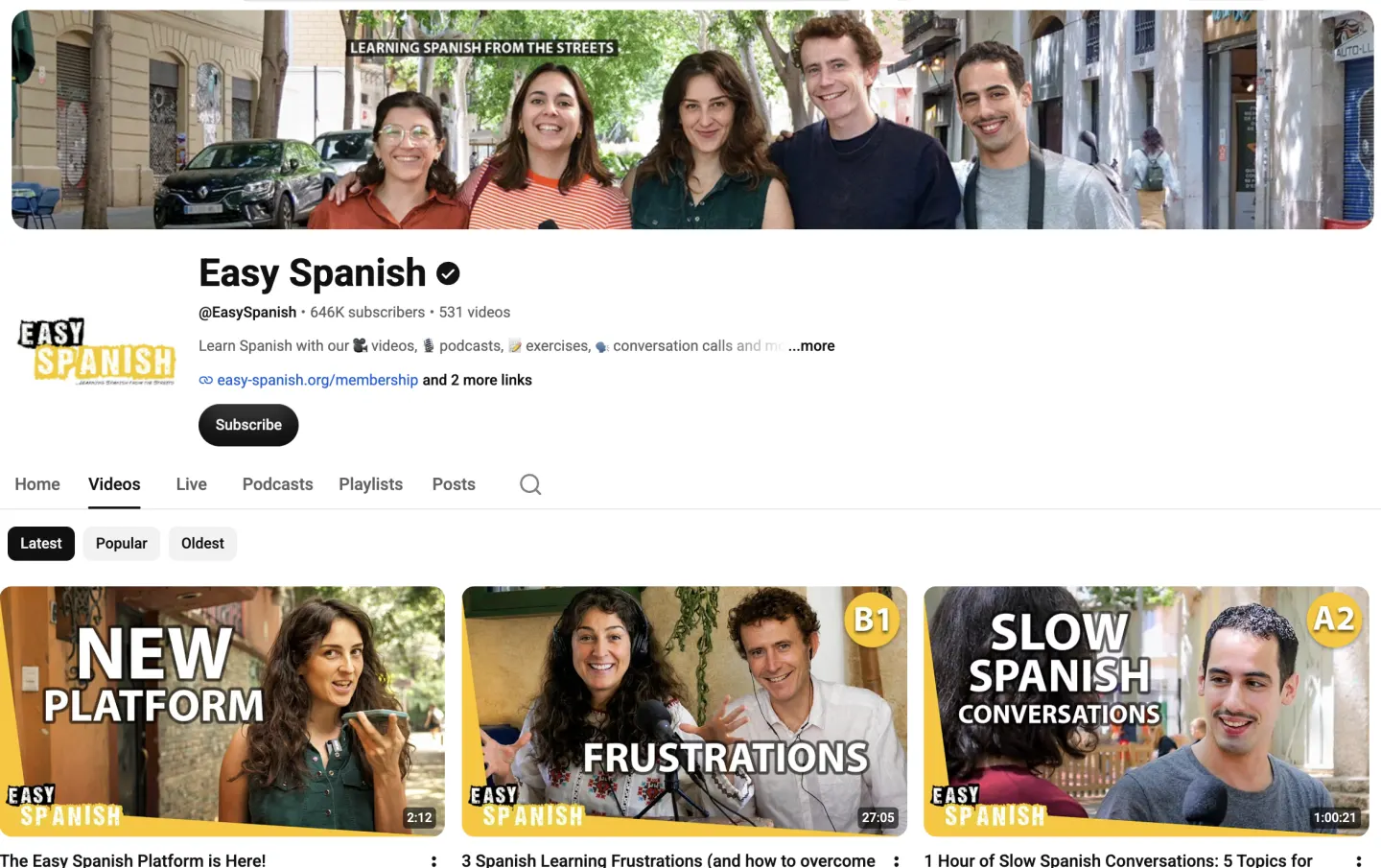
Easy Spanish focuses on street interviews and learner podcasts, with videos ranging from two minutes to an hour and several marked by CEFR level. The material comes from Spain and Mexico.
It is particularly useful for learners who want exposure to spoken Spanish rather than lessons built around a single grammar explanation. The CEFR labels can also give you a practical way to choose material without having to guess whether a video is likely to be manageable.
The recent sample showed no YouTube subtitle tracks, although that does not mean the familiar Spanish-and-English subtitles are absent from the videos: they are burned into the image itself, so YouTube reports no subtitle track.
10. How to Spanish
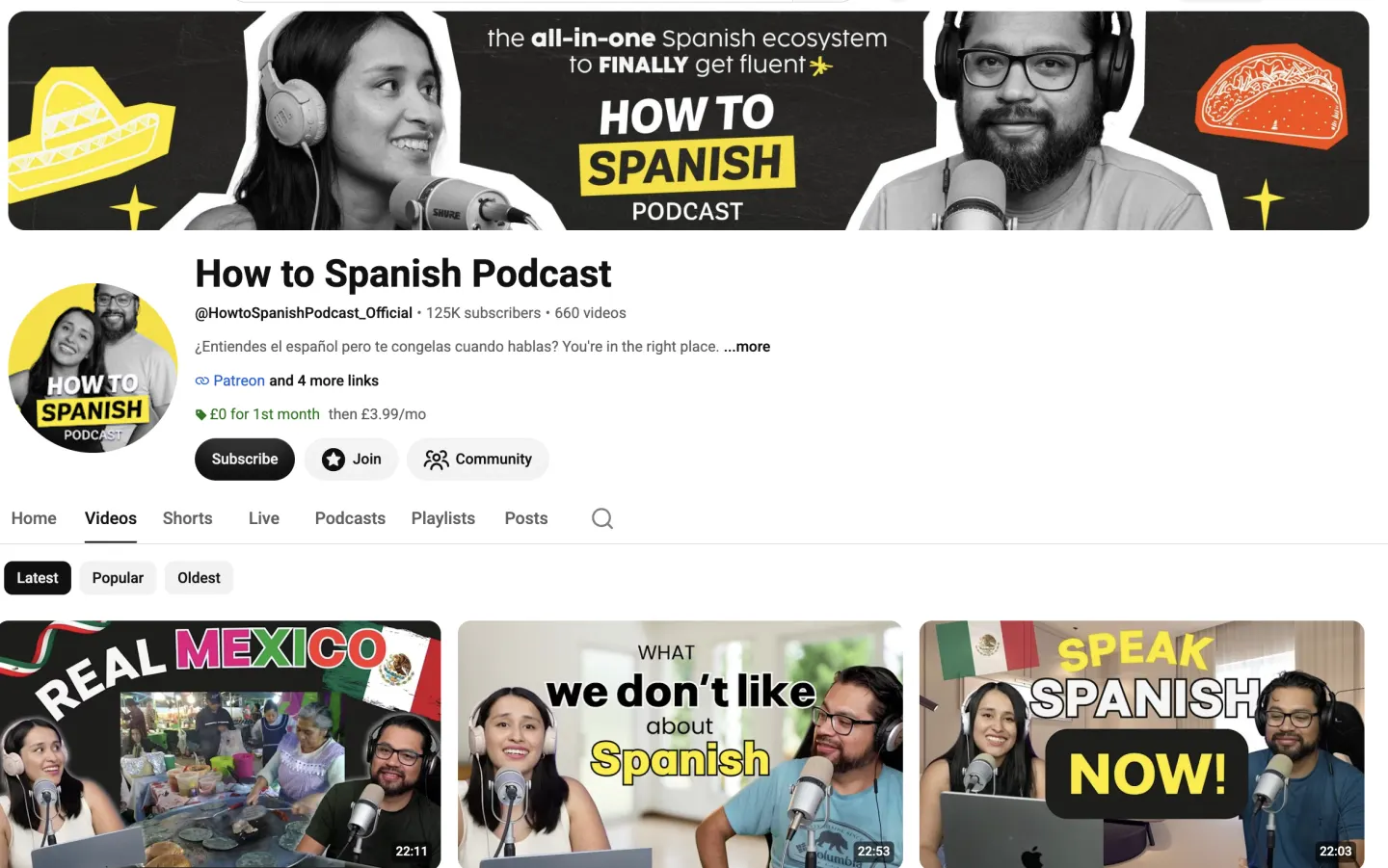
How to Spanish is a long-running Mexican Spanish podcast. Its recent episodes are numbered in the 410s and 420s, and the median recent upload is 24 minutes.
The Mexican focus is also useful when you are specifically interested in that variety of Spanish.
11. Light Speed Spanish
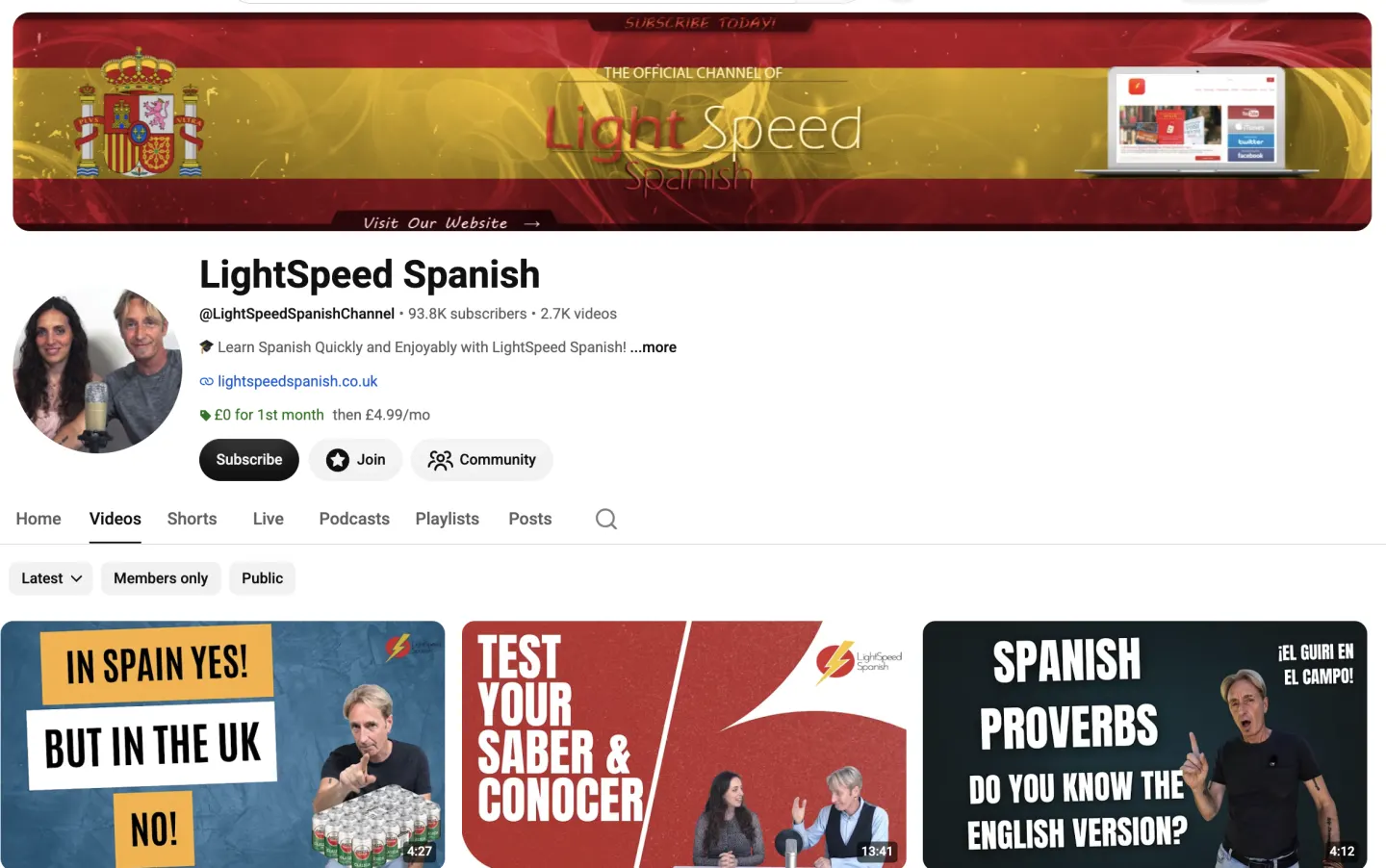
Light Speed Spanish presents short explainers by Gordon and Cynthia. Recent uploads cover topics such as saber versus conocer, adjective placement and a C1 listening test.
The titles are unusually explicit about the subject of each video. That makes it easy to search for the particular grammar or vocabulary issue you are working on and use the channel as targeted practice.
The recent sample included both Spanish and English audio across the videos measured, so check the individual lesson before treating it as pure Spanish listening practice.
12. SpanishPod101
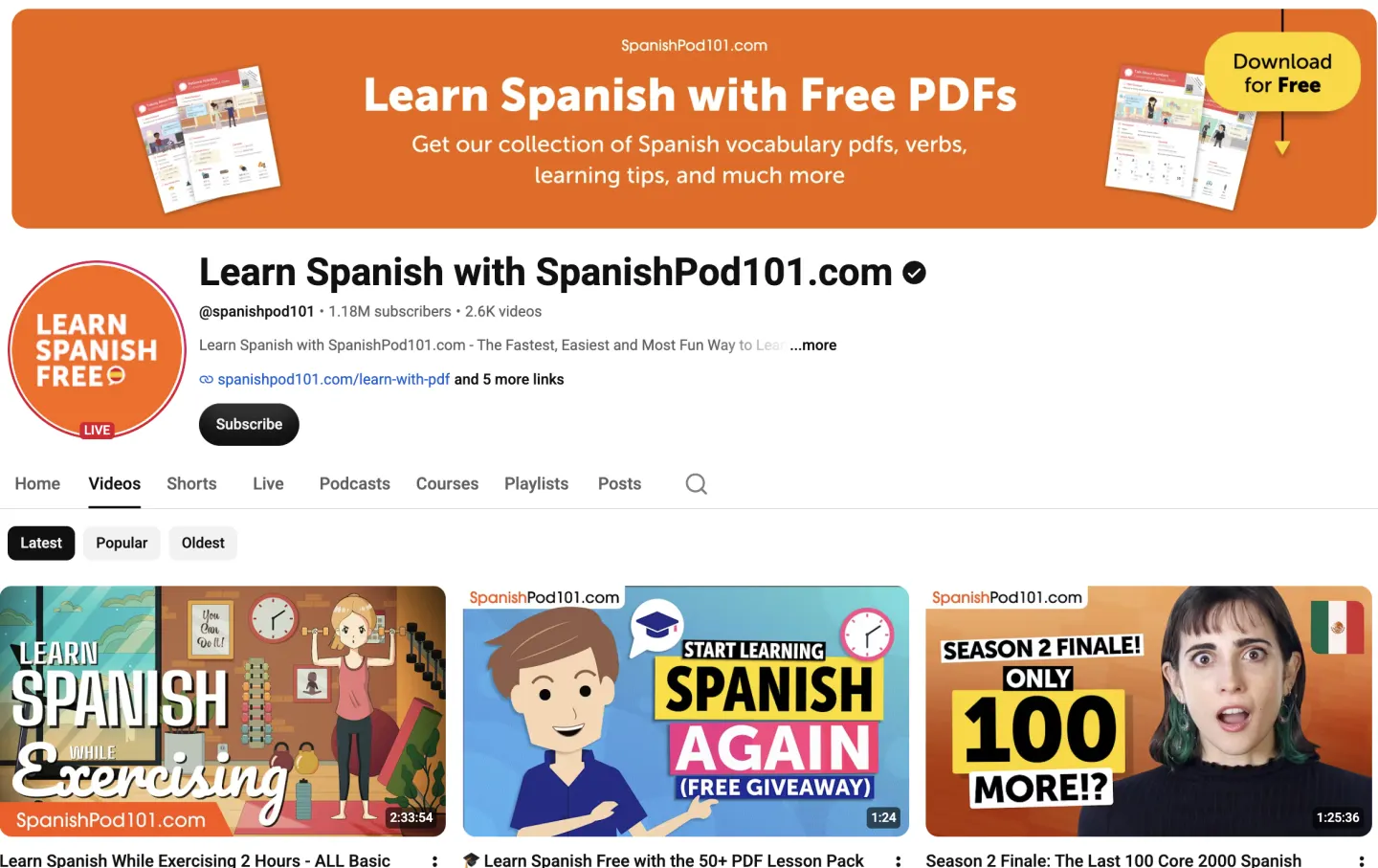
SpanishPod101 has a very different recent run from most of the other channels here. Its recent uploads include very long vocabulary compilations — 154, 86 and 84 minutes — alongside one-minute promotional clips, with relatively little in between.
That makes the channel difficult to describe as one single study format. It can function as a source of very long vocabulary material, but its recent uploads also include extremely short promotional content. The measured sample contained seven Spanish-audio videos and thirteen English-audio videos, so it is not a straightforward Spanish listening source.
13. The Language Tutor
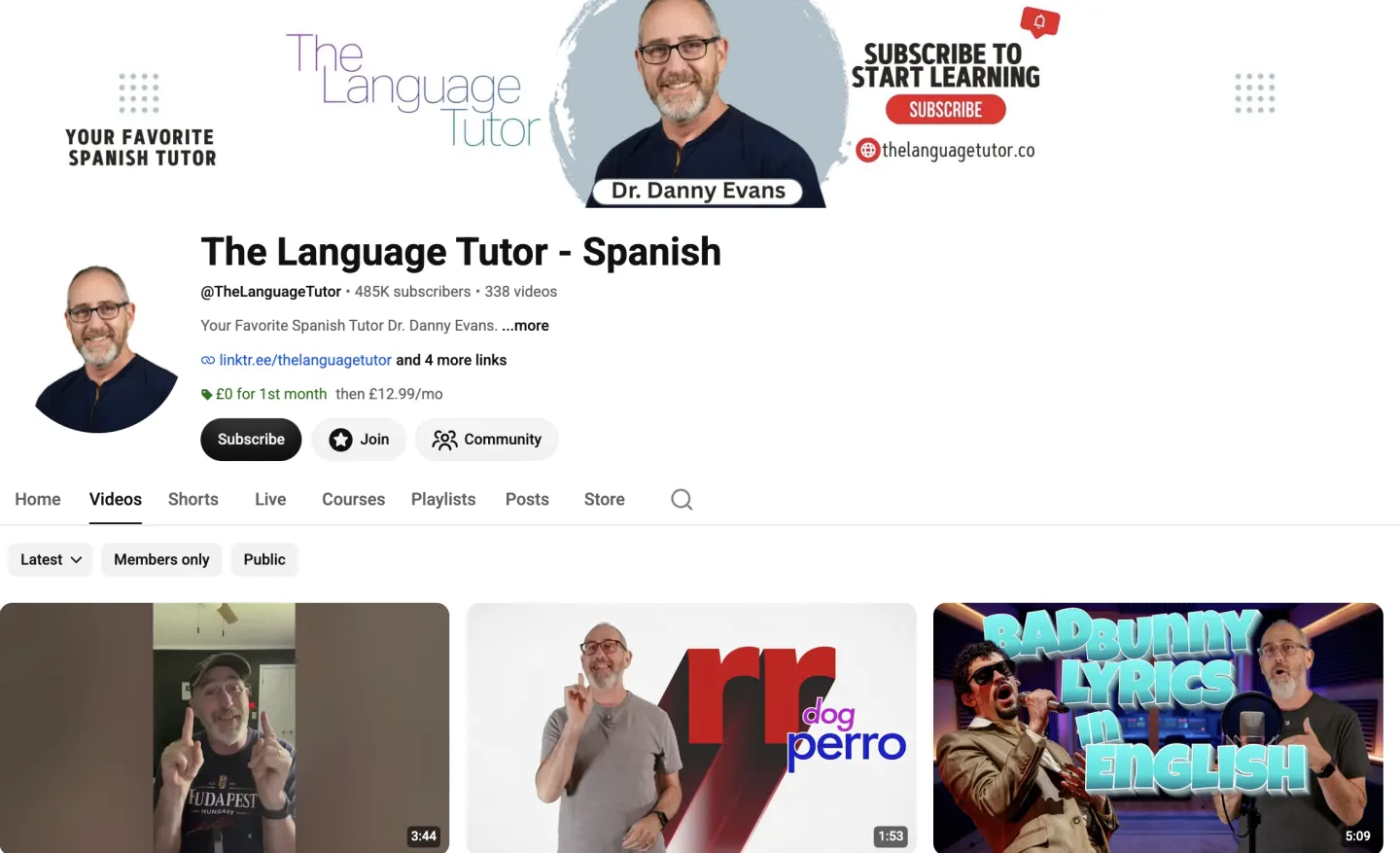
The Language Tutor features short pronunciation and grammar drills by Dr Danny Evans. Recent examples include learning to roll your R’s and a lesson on the 16 most important verbs. The channel also includes a numbered English course taught in Spanish.
It suits learners who want something very specific to work on: pronunciation, a useful group of verbs, or another discrete grammar area. The recent measured sample was mostly English audio, with eleven of the sixteen videos in that sample judged by YouTube to have English audio.
14. Qroo Paul
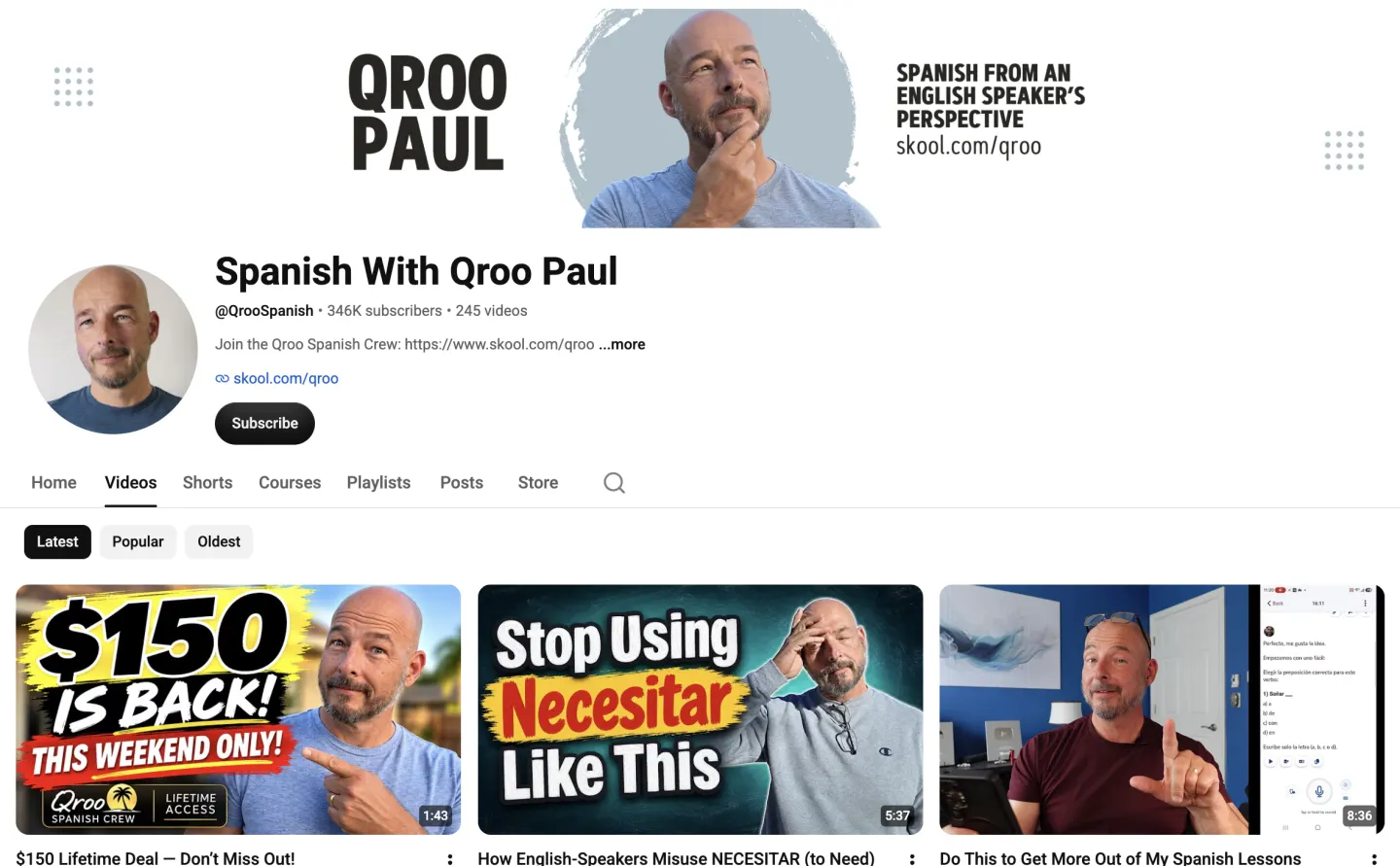
Qroo Paul is based in Mexico and focuses on the sorts of usage problems English speakers encounter while learning Spanish. Recent videos cover misusing necesitar, different ways to say “so”, and understanding spoken Spanish.
It is a useful choice when you know the feeling that you can say something in Spanish but suspect you are saying it in a way a native speaker would not. The recent topics are centred on those practical points of usage rather than broad beginner courses.
One detail is particularly important for anyone using it as listening practice: all twenty videos in the measured sample had English audio. In other words, it is teaching about Spanish, not giving you twenty videos of Spanish-language listening.
15. Spanish with Paul
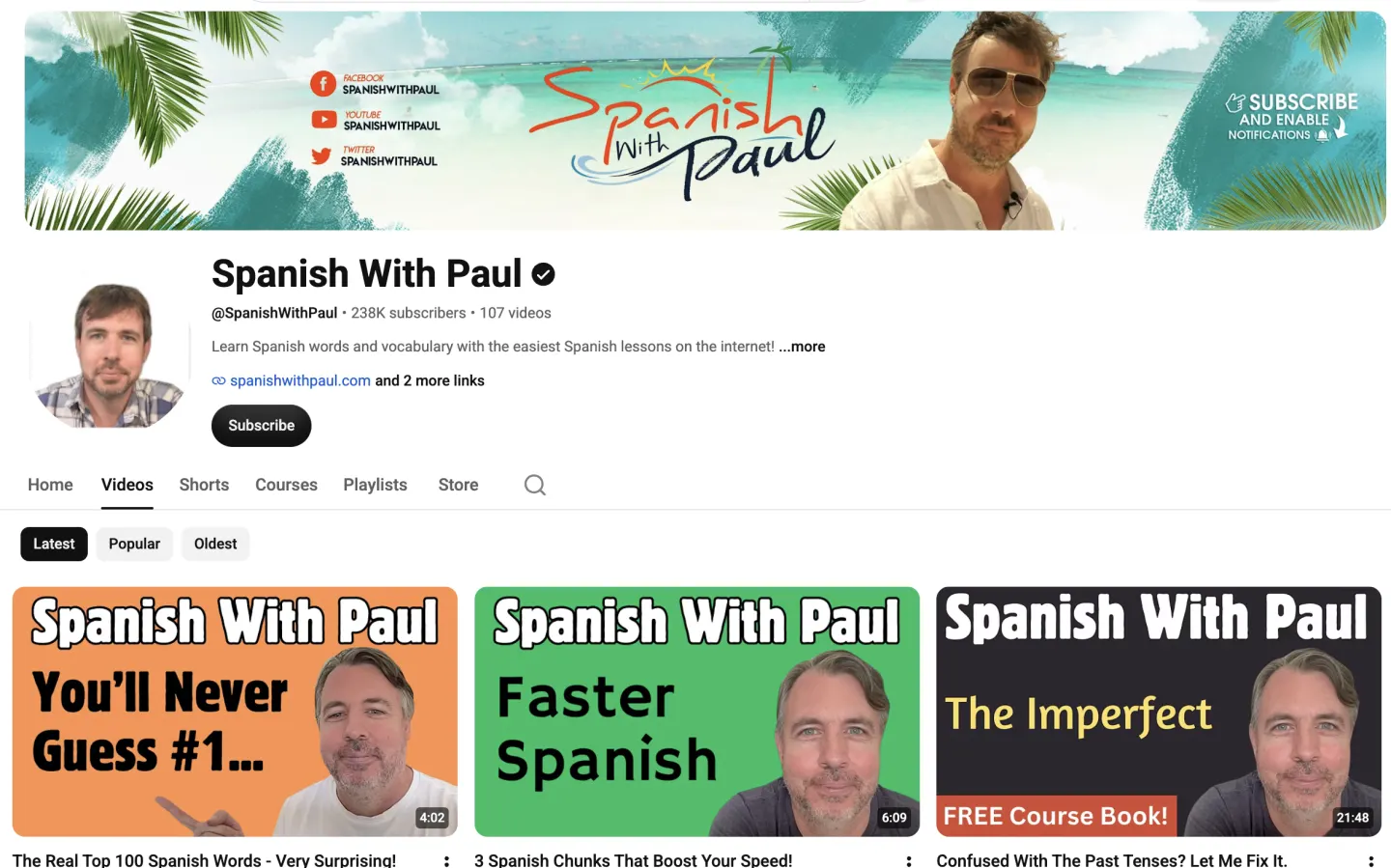
Spanish with Paul offers beginner lessons in English, including some fairly long treatments of individual topics. Two recent past-tense guides run for 22 and 31 minutes, while the median recent upload is 16 minutes.
All twenty videos measured had English audio.
16. Why Not Spanish?
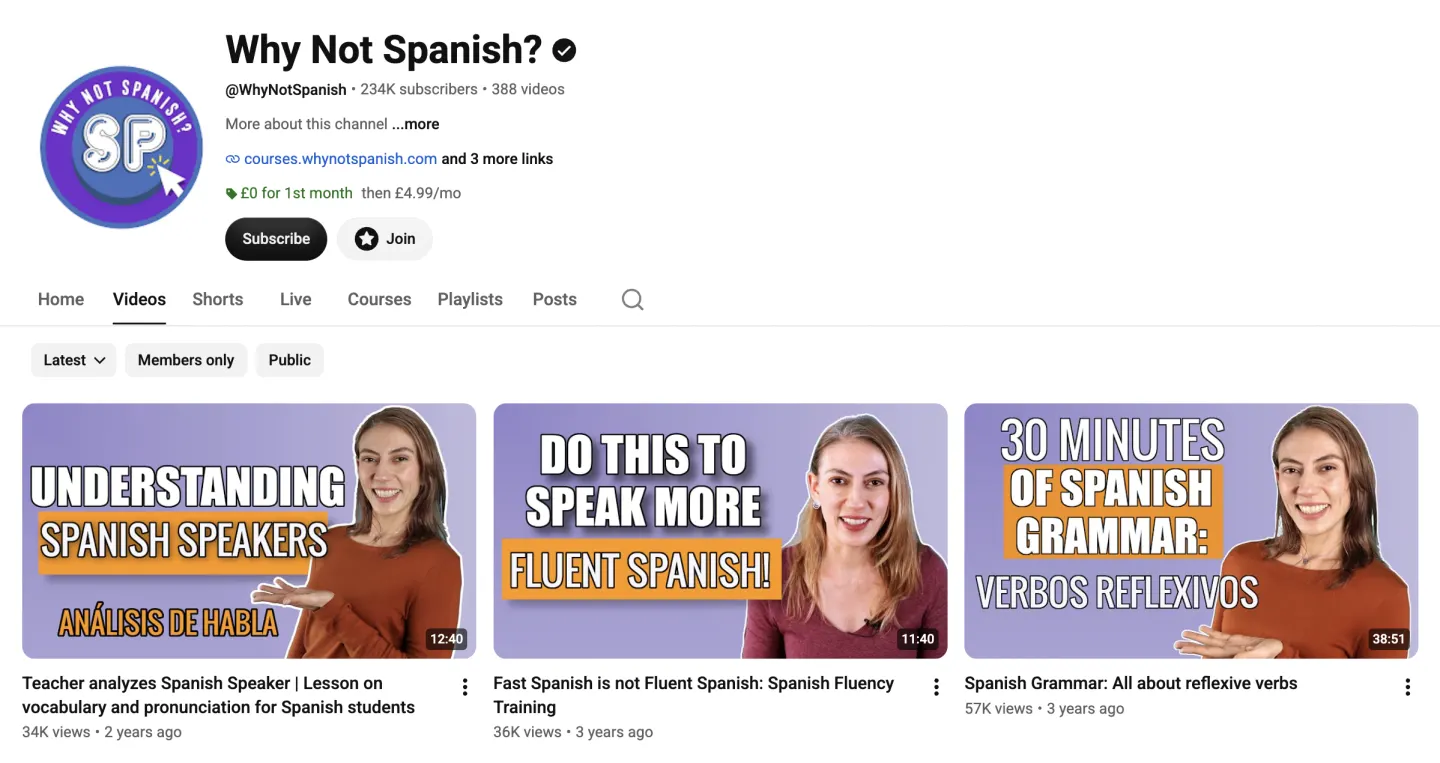
Why Not Spanish? focuses on analysing real speech. María presents the channel with a Colombian accent, and recent videos include breakdowns of native-speaker WhatsApp voice notes, reflexive verbs and frequent phrases.
The channel should appeal to learners who are past the point where textbook examples are the main difficulty and want to understand how real Spanish is put together in context. Analysing a voice note, for example, gives you something concrete to work through rather than a list of isolated sentences.
Six of the nineteen recent videos measured carried a human-written Spanish subtitle track, and the videos in the sample included both Spanish and English subtitle tracks in those cases.
How to choose a channel tonight
Start with the problem you are trying to solve. For comprehension, look towards stories, everyday vlogs, conversations and comprehensible input: Hola Spanish, Spanish After Hours, Español con Juan, Dreaming Spanish, Easy Spanish, How to Spanish and Why Not Spanish? all provide formats where listening is central.
For a specific grammar or vocabulary gap, Spanish Playground, Butterfly Spanish, Light Speed Spanish, The Language Tutor and Qroo Paul are more focused. Spanish and Go is useful when you want Mexican culture and usage explained in English, while Español con Juan, How to Spanish and Why Not Spanish? give you different Spanish-speaking contexts.
For a longer listening session, the median recent uploads are 20 minutes for Hola Spanish, 19 for Español con Juan and Dreaming Spanish, 24 for How to Spanish, and 79 for SpanishPod101, whose recent uploads vary dramatically in length.

The point is not to turn YouTube into another rigid curriculum. Pick the channel that matches what you are trying to improve today.
Frequently asked questions
What are the best YouTube videos for learning Spanish?
The most useful videos depend on what you are trying to practise. For listening, look for comprehensible input, stories, vlogs, interviews and conversations you can follow. For grammar, focused lessons work better. Among these channels, that means the right video could be a Dreaming Spanish story, an Easy Spanish interview, a Spanish Playground grammar lesson or a targeted explanation from Light Speed Spanish.
What is the 80/20 rule for Spanish?
The 80/20 rule is usually used as a way of thinking about prioritisation: focus on the part of the language that gives you the most useful coverage rather than trying to learn everything at once. For Spanish study, that can mean concentrating on common vocabulary, frequent structures and the types of listening and speaking you actually need. It is a study principle, not a fixed percentage that guarantees a particular result.
Is it possible to learn Spanish on YouTube?
Yes, YouTube can provide a large amount of Spanish-learning material, from structured grammar lessons to comprehensible input, podcasts, interviews and real speech. The bigger challenge is choosing material that matches your level and gives you the kind of practice you currently lack. Used consistently, it can be one part of a broader Spanish study routine.
What is the #1 app to learn Spanish?
There is no single app that is automatically the right choice for every Spanish learner. Apps differ in what they prioritise, just as these YouTube channels do. If you already know the basics, your limiting factor may be listening comprehension rather than another sequence of beginner lessons. In that case, Spanish-language video can fill a gap that a conventional course does not.